Findel AR App
Findel is a leading UK education supplier. Already a staple in UK classrooms, their EaRL robot is designed to help children grasp programming fundamentals. My role was to design an AR companion app that was intuitive, playful, and aligned with classroom needs.
Product Design

Findel EaRL Augmented Reality App: Transforming Coding Education
Client: Hope Education / Findel
Industry: Education
Timeline: 8 months (2022-2023)
My Role: Lead Digital Product Designer
The app had to work for two very different users at once: teachers running a lesson, and young students (KS1/KS2, ages 5 to 11) learning hands-on. The goal was an interface that stayed simple and accessible while still making the most of AR technology to enhance and engage the lesson.

Early Obstacle
The original plan was for the AR camera to track where the EaRL robot landed on the mat, then celebrate when a student's coding sequence reached the right square. Early testing showed this wasn't technically possible. We were a small team with a product that needed to ship, so I needed a different way to trigger positive feedback.
After talking it through with the early education team and developers, I designed a numeric input system. Each square on the mat got a number, and children typed in where they thought EaRL had ended up. It worked within our technical limits and kept to the existing lesson plan structure, so children could still progress through each challenge.

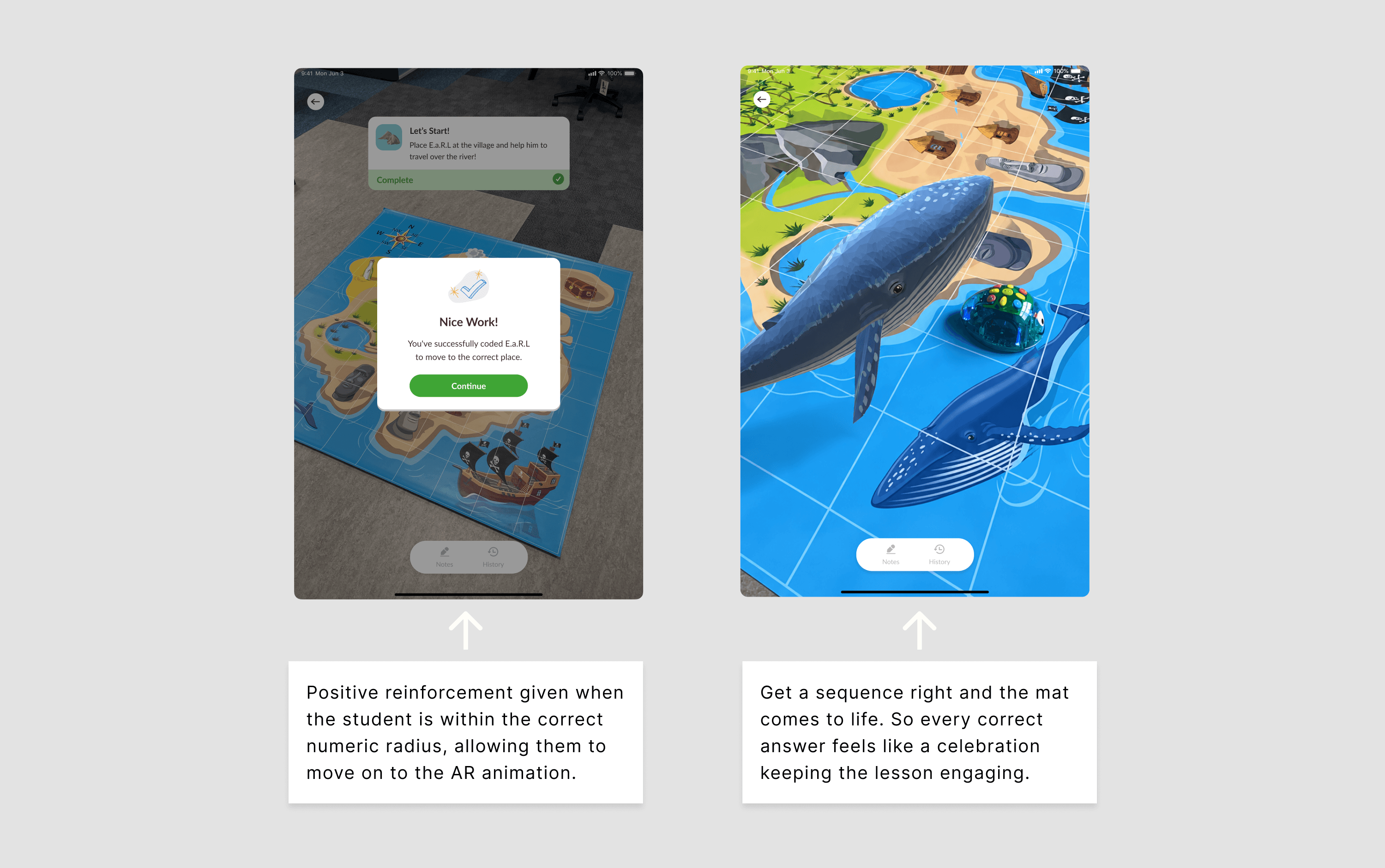
When we tested the high-fidelity designs with students before development, the workaround turned out to be better than the original plan. Students gathered around the tablet, entered their answers together and celebrated when the sequence was correct.
Entering the robots position manually meant the children became more intentional with the way they worked, taking time to input the number while working in a team created a focused and engaged learning environment.

My Approach
Started in the classroom: I tested early prototypes with teachers and students to understand classroom workflows and the needs of young learners. That shaped an interface built for early years: big, intuitive, colour-coded controls and visual cues over text, so children could take part without relying on reading.
Designed for play. I created an intuitive, playful interface that works consistently across devices. Using Hope Education's brand guidelines, I illustrated a set of hand-drawn icons and spot illustrations. Their sketchy, iterative style reflects how children learn to code: try, adjust, try again.
Built it alongside developers. I worked with the development team daily to bring the design into Unity AR on Android and iOS, keeping the quality and consistency of the design intact.

Outcome
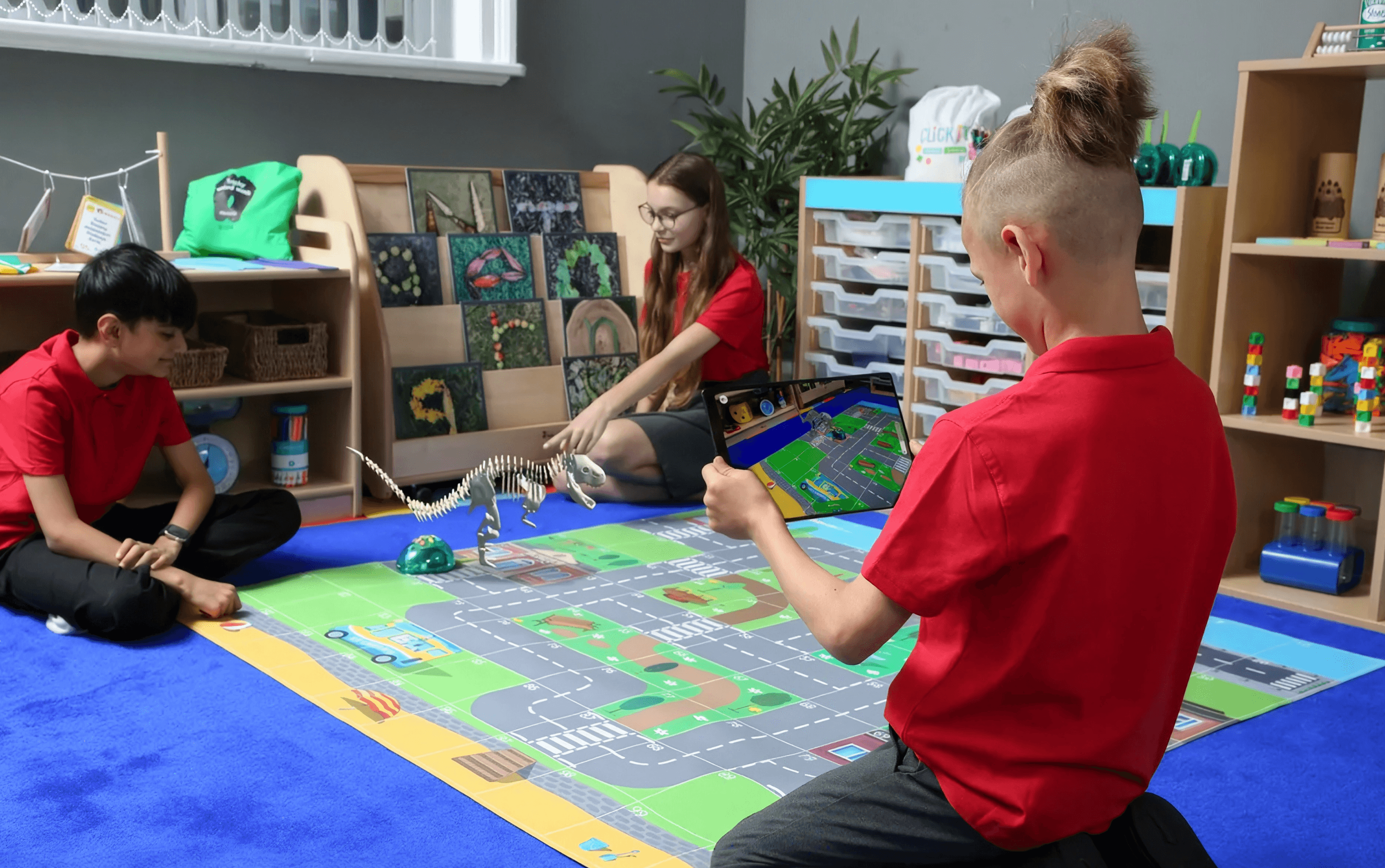
The app launched across UK schools on both Android and iOS, transforming EaRL lessons into a more immersive, interactive experience. Teachers praised its simplicity and accessibility, noting how easily it fit into existing lesson plans. Students responded with excitement, and it quickly became a valuable companion to Findel's existing EaRL product.
This project was a reminder of how flexibility and collaboration are central to great design. When technical constraints disrupted the original wireframes, adapting quickly and working closely with developers turned a challenge into an opportunity for creativity.